
Enniscrone eviction controversy reaches resolution 

Sonas retirement village


By Cara McHugh

Residents say they await official word in writing as a councillor tells one tenant this was reached through a “gentleman’s agreement”. 

Councillor Joe Queenan has told the Sligo Weekender that an agreement has been reached on the Sonas Retirement village eviction controversy. 

“We have a resolution. Basically, the landlords have entered into discussion with Sligo County Council that the landlords have now decided that there will be no evictions”. 

“I informed the six houses”. “We are waiting for a press release from Sonas”. 

Asked if the residents will now be allowed to stay there permanently, Cllr Queenan said “There’ll be no way of leaving their houses, and they won’t be pressurised to get alternative accommodation – but obviously if alternative accommodation comes along – that changes the situation”. 

He was then asked if this means that an alternative date has been agreed or that the residents will have to vacate at some stage, to which he replied, “no date has been put on this with the tenants – they will remain there. No one will be asked to leave their house”. 

He continued, “the landlord has reflected on the scenario. They were entitled to put the house for sale last November and as the weeks went by there was no alternative accommodation for these people [the current tenants] and after discussions behind the scene with the landlord and Sonas people and Sligo County Council”. 

He continued, “there was no alternative accommodation to be found and they agreed to allow the current tenants to stay until other accommodation was to be found but there was no date on it. The reality here is that this is not going to happen overnight because there is no alternative accommodation in the short term or medium term either”. 

“To be fair to the Sonas people, it is the former directors of Sonas that own the houses. They’re separate from the nursing home. However, the tenant has rights so we pressed on the landlord with this scenario and I think it’s a very good outcome”. 

He acknowledged that it was a stressful time for the residents and said it was a difficult situation to avoid, “the people that owned the houses wanted to sell on and Sligo county council weren’t in a position to buy the houses because of the criteria”. 

“It’s as good a resolution as you can get at this time. The tenants should be re-assured that they will not have to leave their property”. 

Cllr Queenan understands that Sonas will be releasing a statement in due course, but a timeline for when this will happen is unknown. 

“I’ve seen nothing in writing yet but I’m assured that it will come in writing from Sonas”, said Cllr Queenan. 

The residents have been informed by Cllr Queenan as he called to their houses with this update but have not received any official update in writing from Sonas or indeed Cllr Queenan. 

One resident was away when Cllr Queenan made these house calls, as she told the Sligo Weekender she was totally unaware of this until she had been informed by the media. 

“I haven’t heard – and I wonder if it’s just a number of people who are on HAP or social welfare”, she said. 

She details how she had not heard any correspondence on this issue since last year, even from solicitors. 

“I haven’t heard anything at all to say we’re staying”, she said. 

Another resident said she was informed by Cllr Queenan, but that she was “a bit weary about it until we get confirmation we’re staying from the owners so hopefully that will happen”. 

She said Cllr Queenan had told her when visiting her house that “the owners are letting them stay there until after June” and when asked how this was achieved, he told her it was a “gentleman’s agreement” and gave her a smile. 

This resident said she would not be happy if the line was given to them that they can stay but only until they find ‘alternative accommodation’ as she said,“how on earth could that happen? My husband is in emergency respite right now because I fell and broke my arm and I am his full time carer”.

“We’ve had so much on our mind because of this. We were supposed to be out on the 5th of June, my husband will be 89 years old on the 17th of June! He can’t walk and he has dementia, how on earth would we find alternative accommodation – I am 84 years old myself”.

She said she really hopes to get official confirmation in writing soon around this recent update. 

She said that they will not find alternative accommodation and would have to dispute this if it was Sonas’ intention to propose this, as she said her husband needs specific physical requirements with his condition. 

“It would be impossible for us to get accommodation to suit him”, she believes. 

This resident echoed the thoughts of the other resident interviewed, as she said that she also has not received much correspondence over the issue. She details that she tried to contact the names that were listed on her eviction notice but she did not get much satisfaction. 

“Each time a different person would say it’s not down to them it was someone else, and a committee would be meeting in a couple of weeks over it. I would then ring back in a couple of weeks and they would say that the meeting didn’t take place. This went on for months. One particular person stopped taking the calls and said he was working from home and couldn’t take my calls from home – so I just stopped ringing then”. 

She said that through media attention, local councillors and TDs were in touch with her with concern but she had not seen action.  

“I’m fighting until something will be printed – they’re keeping us waiting”. 

She said the period waiting for an update and not knowing if the eviction would be happening was “dreadful and coming up to Christmas too”, as they were first informed in November 2025. 

These residents are now awaiting official confirmation in writing from Sonas over this issue. 
VN:F [1.9.22_1171]
Rating: 0.0/5 (0 votes cast)
VN:F [1.9.22_1171]
Rating: 0 (from 0 votes)

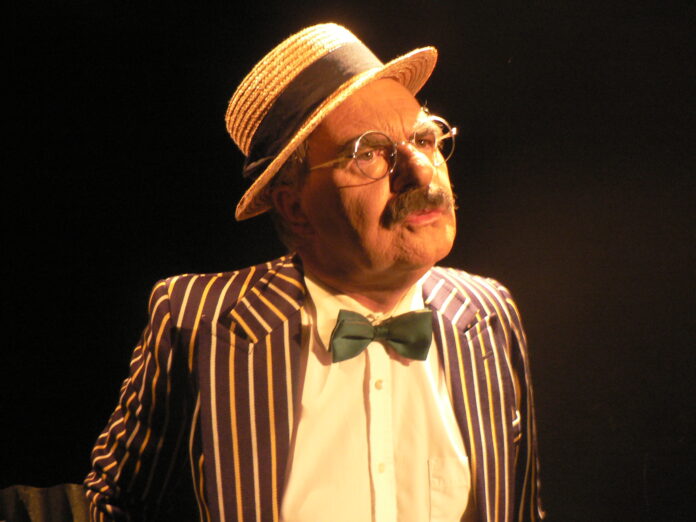
Gerry Farrell : The actor, the counsellor and the storyteller

By Cara McHugh

From the wards of St Columba’s Hospital to the bright lights of the Hawk’s Well Theatre,
Gerry Farrell has spent more than five decades telling stories – sometimes through
counselling, sometimes through comedy, and often through both at once.

The Manorhamilton native, now living in Sligo town, has become one of the North
West’s most recognisable theatre figures, known for his one-man performances, historical
plays and his ability to blend humour with deeply human themes. Yet alongside his long
acting career, Farrell also built a parallel life working in mental health services,
psychotherapy and dementia care.

That unique combination of experiences has shaped much of his recent work, particularly
his acclaimed one-man show I Had to Go for Counselling, which sold out two nights at
Hawk’s Well Theatre and has since toured venues across Ireland.

Speaking to the Sligo Weekender, Farrell reflects on a life spent balancing theatre and
psychiatry, the courage of historical figures, and why the arts community in Sligo
continues to inspire him.

“I started off in St Columba’s Hospital, the mental health services here in Sligo, as a
psychiatric nurse,” he explains. “Then I subsequently studied psychotherapy and ended
up teaching that for a while in Trinity College Dublin and then teaching applied social
care in the IT in Sligo as well.”

Over the years, he worked across a wide variety of areas including addiction services,
adolescent psychiatry and eating disorders. It was almost by accident, however, that he
found himself working with dementia patients – an area that would later become
particularly important to him.

“I was asked to fill in on the dementia unit,” he says. “When I started working there, I
started to develop these techniques. It wasn’t designed, to be honest with you. It was
more that it came to me.”

Today, Farrell still trains nurses, carers and families in practical dementia care
techniques, many of them based around “validation therapy” – approaches designed to
reduce distress and confusion for patients.

He gives one example.

“You might have a woman at three o’clock in the morning whose mother is saying, ‘I’m
going home.’ The daughter knows if she says, ‘You are at home,’ things will get worse.

So instead, you validate the person and say, ‘Okay, let’s go home,’ and then gently
distract them until they settle.”

Interestingly, Farrell says some of the techniques he developed in mental health care were
influenced by his theatre background.

“A lot of the techniques were based on some of the stuff I would have done in drama as
well,” he says.

That love of drama began early.

Farrell credits his teachers at the Comprehensive School in Manorhamilton for first
encouraging his interest in acting, particularly teacher and director Prin Duignan, who
remains a close friend and collaborator to this day.

“My first part was in 1971 in Yeats’s Kathleen Ni Houlihan,” he recalls. “I’ve been in
plays every year since then.”

The theatre quickly became more than just a hobby. While working in challenging
psychiatric settings, Farrell says acting became a kind of release.

“It was what we call in psychotherapy a transcendent function,” he explains. “It gave me
an energy that I could do my work without getting stressed out.”

His long association with the Hawk’s Well Theatre stretches back to the 1980s. One of
his earliest performances there was playing Gar Private in Philadelphia, Here I Come!,
directed by the late Liam McKinney.

Soon after, Farrell’s fascination with the works of James Joyce led him to create what
would become his first one-man show.

During annual Bloomsday trips to Dublin in the 1980s, Farrell would read extracts from
Ulysses alongside well-known Joycean scholar David Norris and actor Eamon Morrissey.

“David Norris said to me, ‘You should make a show of that,’” Farrell remembers.

That suggestion led to Blooming Ulysses, a one-man adaptation based on Joyce’s famous
novel, first performed 40 years ago and still touring today. The show brought Farrell on
two tours of the United States, including performances at Yale University and venues
stretching from Syracuse to Florida and Kansas.

“You couldn’t make these things happen,” he says with a laugh. “I absolutely loved
America.”

While Farrell has spent years acting in productions by companies including Beezneez
Theatre Company, he has also established himself as a playwright in his own right.

Working closely with director Prin Duignan and Splodar Theatre Company, Farrell wrote
three ambitious historical plays: The First Protestant, based on Martin Luther; The Last
Prime Minister of Ireland, centred on David Lloyd George and the Anglo-Irish Treaty;
and The Sceptical Suffragette, which explored the lives of the Pankhurst sisters.

Farrell says the historical research behind those productions could take years.

For The Last Prime Minister of Ireland, he and his wife travelled to Wales and visited
archives to study Lloyd George’s papers firsthand.

“What fascinates me is the psychology of these people,” he says. “They went against the
grain of the time. They had courage.”

That interest in psychology and character is also central to I Had to Go for Counselling,
the show that unexpectedly became one of Farrell’s biggest successes.

The idea first emerged while Farrell was giving a talk on mental health to retired teachers
at The Model in Sligo.

“In the middle of it, it just occurred to me – this could actually be a one-man show,” he
says.

The production follows a retired teacher struggling with depression and reluctantly
attending counselling. Through humour and reflection, the character revisits regrets,
relationships and life lessons.

Farrell admits parts of the script are semi-autobiographical.

“I think it just resonates with people,” he says. “I would have had no idea it would
become as successful as it was.”

His wife also unknowingly contributed to the writing process. Wanting to make the main
character a keen gardener, Farrell asked her to explain what she had been doing in the
garden and typed down her descriptions word-for-word.

“People who know me said, ‘He didn’t write that himself,’” he jokes.

Last year also brought another major honour when Farrell was named Leitrim Guardian
Person of the Year for 2026 – an award recognising his contribution to theatre, mental
health and community life.

“I was overwhelmed,” he says. “I grew up in Manorhamilton seeing people get that
award. I never imagined I’d be in the same category.”

At the ceremony in Carrick-on-Shannon, speakers from both the HSE and the theatre
world paid tribute to Farrell’s decades of work.

“It was like being at my own wake,” he laughs. “I didn’t realise I was held in the regard I
was.”

One of the proudest moments of the evening, he says, was having his grandchildren there
– although one young grandchild delivered an honest assessment of the family hierarchy.

“He said, ‘Granddad is funny, but nanny is clever.’”

Farrell is far from slowing down.

He is currently rehearsing a new comedy called HOQIA, which stands for Heck Of A
Quality Inspection Assured – a light-hearted satire inspired by healthcare inspections by
HIQA and described by Farrell as “Father Ted for the health services”.

The show will premiere at the Hawk’s Well in July before touring elsewhere.

He has also already booked another production, Revision, for October 2027.

That confidence, Farrell says, comes largely from the encouragement he receives from
the team at the Hawk’s Well Theatre.

“The culture there now is so conducive to creativity,” he says. “When you go into the
Hawk’s Well, everything is possible.”

For Farrell, that spirit of collaboration and support continues to fuel his creativity after
more than 50 years on stage.

And whether he is counselling families, researching historical figures or making
audiences laugh through one-man performances, the thread running through all of it is
ultimately the same: understanding people.

“I’m interested in people who have courage,” he says. “That’s what always fascinates
me.”

VN:F [1.9.22_1171]
Rating: 0.0/5 (0 votes cast)
VN:F [1.9.22_1171]
Rating: 0 (from 0 votes)

Test flights carried out at Sligo Airport as Air Ambulance plans progress

Air ambulance to be based in Sligo Airport

By Christopher Conway

The National Ambulance Service (NAS) has confirmed that a series of test flights have been carried out at Sligo Airport as part of preparations for a proposed new air ambulance service in the North West.

In a post on its official social media channels, NAS said the flights form part of ongoing operational work connected to the development of a Helicopter Emergency Medical Service (HEMS), which is expected to significantly improve emergency response times across the region.

The proposed service would support counties Sligo, Leitrim, Donegal, Mayo and Roscommon, with a focus on improving access to critical care for patients in rural and hard-to-reach areas where road ambulance response times can be prolonged.

Sligo Airport has already been identified as the preferred location for the North West HEMS base, following a selection process carried out by the National Ambulance Service. The site has been widely viewed as strategically important due to its existing aviation infrastructure and its central location within the region.

The airport is already home to Irish Coast Guard search and rescue operations, which operate 24-hour coverage from the site. This existing aviation activity is seen as a key advantage in terms of integrating a potential air ambulance service into the facility.

Once operational, the North West HEMS would complement existing aeromedical services in Ireland, including the Emergency Aeromedical Service based in the Midlands, providing a faster and more targeted helicopter response to serious medical emergencies.

The NAS has not yet confirmed a launch date for the new service, with planning and operational assessments continuing. However, the recent test flights are being viewed as a positive step forward in the development of the service.

Local stakeholders have previously welcomed the prospect of a dedicated air ambulance base in Sligo, highlighting its potential to significantly improve emergency care outcomes across the North West.

Further updates are expected once final planning and operational decisions have been completed by the National Ambulance Service.

VN:F [1.9.22_1171]
Rating: 0.0/5 (0 votes cast)
VN:F [1.9.22_1171]
Rating: 0 (from 0 votes)

Sligo GP Dr Margaret Connolly detained by Israeli forces

Margaret Connolly in Crete, Greece
By Cara McHugh & Christopher Conway 

The Global Sumud Flotilla has confirmed that Dr Margaret Connolly from Sligo has been intercepted from her boat, Blue Toys, this morning. 

She was sailing to Gaza to deliver aid and has been on this journey for over three weeks. 

On the Éire Flotilla page, a video was posted of Connolly as she says, “if you are watching this video, it means I have been kidnapped from my boat in the flotilla by the Israeli occupied Forces”. 

“I am so proud to be taking part in this flotilla, it is the largest to date”. 

According to the Flotilla tracker page, her boat was intercepted at 264.6 nautical miles away from the red line of Gaza. She was taken with other Irish citizens on her boat, including Louise McCormack of Westmeath. 

Irish organisers said at least 15 Irish citizens were participating in the flotilla, with six now believed to have been detained.

Snapshot from SOS video which the Éire Flotilla page posted after Israeli interception

Two weeks ago, the boat she was sailing on retreated back to the eastern coast of Crete in Greece after her fellow flotilla participants in boats parallel to hers were intercepted by the Israeli Defence forces.

Speaking to the Sligo Weekender when her boat set sail again for Gaza twelve days ago, Dr Connolly re-iterated her reasons for participating in this mission, “I call on Mícheál Martin, to not use our airspace, or Shannon, to call for the banning of Israel from the United Nations, all ties with Israel – all education, all medical, all business, all economic – an apartheid state must be broken”. 


VN:F [1.9.22_1171]
Rating: 0.0/5 (0 votes cast)
VN:F [1.9.22_1171]
Rating: 0 (from 0 votes)

Historic win for Ballymote Celtic in the Connaught Shield Final 

Ballymote lift the shield after the game

By Christopher Conway

Ballymote Celtic have secured the biggest trophy in the club’s history after a dramatic late surge saw them defeat their opponents 4 – 2 in a thrilling Connacht Shield final, sparking celebrations across the town and marking a landmark moment for the club.

The Sligo side, founded in 1978, produced a performance full of resilience and quality, holding their nerve in a tense finish before sealing victory deep into injury time.

For club secretary Stephen Cannon, who has been involved with the team for many years, the achievement represents something unprecedented in the club’s long history.

“It’s massive for the club,” he said. “We’ve been going since 1978 and have never won anything this big before. I’m so proud of the lads. I’ve been with the team for years and never experienced anything like it.”

The build-up to the final had already generated huge excitement in the local community, with strong support evident throughout the week leading into the game.

“The atmosphere was unreal in the build-up,” Stephen explained. “It’ll probably go on for another week yet. You know yourself how these things go.”

On the pitch, Ballymote Celtic appeared in control for large periods of the contest. Leading 3 – 1 heading into the closing stages, they were forced to dig deep as their opponents fought back to make it 3 – 2, setting up a nervy finish.

“The team played very well,” Stephen said. “They were on top for most of the game. We were 3 – 1 up with about eight or nine minutes to go, but then it got nervy. A lot of decisions seemed to go against us, and we weren’t sure how much injury time there was.”

However, Ballymote showed composure when it mattered most, scoring in added time to put the result beyond doubt.

“Then we scored in the 98th minute, deep into injury time, to make it 4 – 2. Absolutely fantastic,” he added.

The scenes at full-time reflected the magnitude of the achievement, with supporters celebrating alongside players in what has been described as one of the club’s greatest ever days.

Stephen believes the success highlights the importance of the relationship between the team and its local support base, which played a significant role throughout the season.

“It’s very important,” he said. “You need that backing behind you at a big time like this. Everyone was behind us. There was a huge crowd in Castlebar.”

That support extended well beyond match days, with the entire town visibly rallying around the team in the lead-up to the final. Businesses across Ballymote displayed flags and colours, while volunteers helped transform the town in support of the squad.

“Every business had flags and something up,” Stephen said. “The committee and players all volunteered to put flags up around the town, hundreds of them.”

He also highlighted the level of local sponsorship and backing the club received, which contributed to preparations for the final.

“We got great sponsorship for it,” he explained. “Kelly’s provided a full new kit, Trevor O’Connor sponsored kit bags, and other local businesses like CJ Construction and the funeral directors all helped out. Even John Dodd provided new tops for the players.”

“Haley’s even supplied a teleporter to help put up all the flags and banners. There was a lot of support from the local community. It was unbelievable.”

Looking ahead, Stephen believes the victory could mark the beginning of a strong period for the club, particularly given the squad’s young makeup.

“That team is getting better,” he said. “It’s a very young team. We’ll hopefully bring in a few more local players as well. If we add to what we have, we’ll be very strong.”

While Ballymote Celtic have enjoyed success at local level in the past, Stephen admitted this triumph stands apart from anything the club has previously achieved.

“We probably won a few local cups and things,” he said, “but this is a big one. We haven’t seen scenes like this before.”

Ballymote Celtic players celebrate

As celebrations continue, plans are already being discussed for a formal event to mark the achievement, with a dinner dance among the possibilities.

“We’ve had some celebration so far,” Stephen said. “It’ll probably go on for the full week, and we’re hoping to have something later on as well.”

For a club that has spent decades building its place in the local football landscape, this long-awaited breakthrough represents more than just silverware; it marks a defining moment in its history, and one that will live long in the memory of players, supporters, and the wider community alike.

Stephen thanked supporters for turning up throughout the season, saying, “I’d like to thank everyone for their huge effort. Through all sorts of weather, they kept coming” 

VN:F [1.9.22_1171]
Rating: 0.0/5 (0 votes cast)
VN:F [1.9.22_1171]
Rating: 0 (from 0 votes)

County comes out in force for FTD Brothers marathon challenge

Jordan looks back at his young brother during Sligo leg of their marathon tour

By Christopher Conway

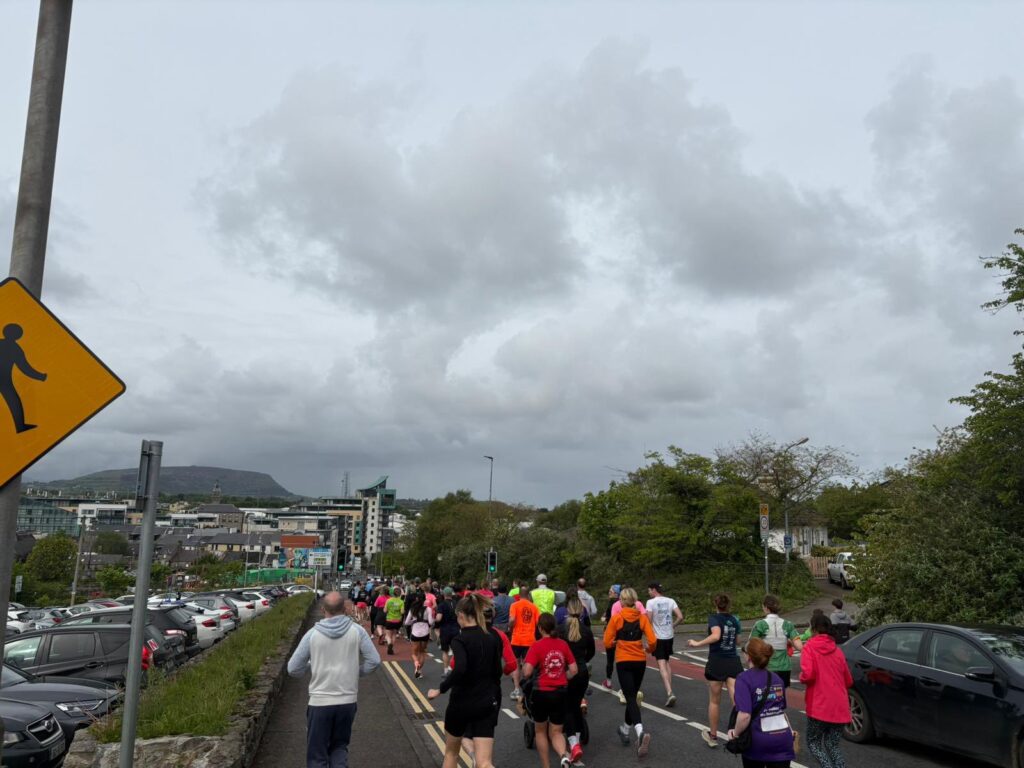
A large crowd gathered in Sligo on Friday morning to welcome Jordan and Cian Adams, better known as the FTD Brothers, as they began the Sligo leg of their extraordinary marathon challenge across Ireland.

The Worcestershire brothers are currently undertaking an ambitious challenge of running 32 marathons in 32 days across every county in Ireland to raise awareness and funding for frontotemporal dementia (FTD), a cruel and lesser-known form of dementia that has devastated their family for generations.

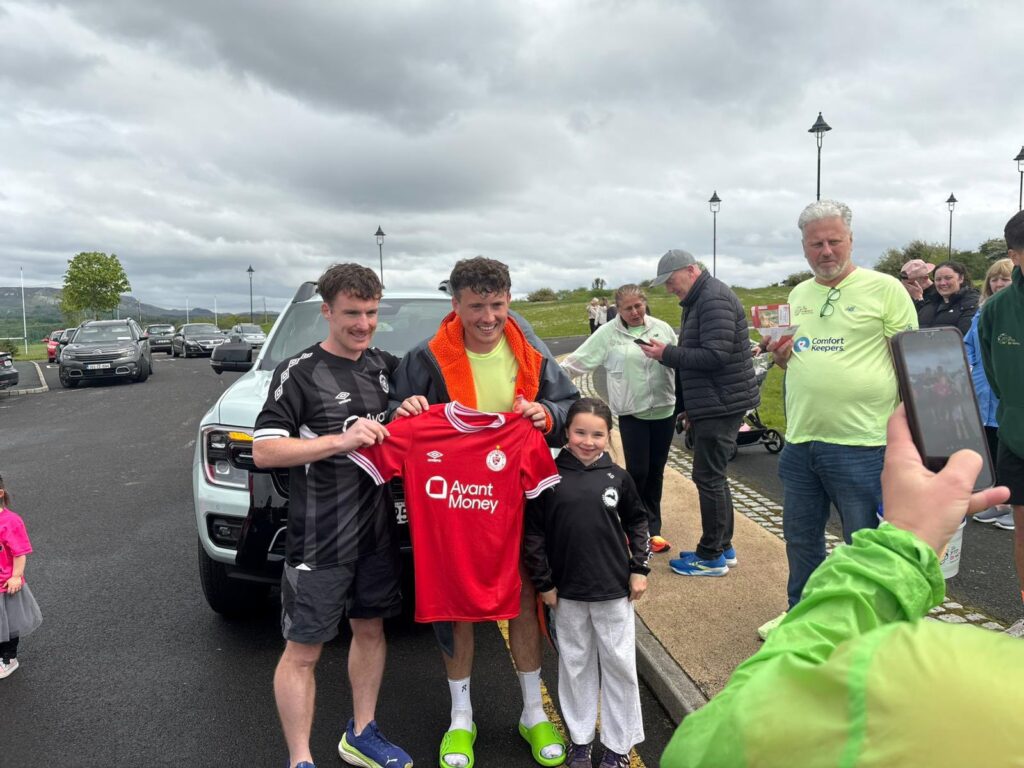
Arriving at O’Boyle Park shortly after 10am, the pair were greeted by schoolchildren from Carbury National School and St Edward’s National School, local runners, supporters and members of the wider community before setting off through County Sligo accompanied by around 60 runners.

By the time they reached Sligo, the brothers had already attracted international attention, raising more than £1 million for dementia charities while drawing huge crowds across the country.

Jordan Adams admitted the scale of support they have received throughout Ireland has been difficult to process. “We could never have imagined the crowds to be like they have been over the past 11 or 12 days,” he said.

“I’m extremely tired and overwhelmed by it all. It’s hard to take it all in because I’m managing so much pain and fatigue, but we’re just incredibly grateful. The crowds here in Sligo this morning are incredible.”

Sligo crowd comes out in force to support the brothers

The challenge came almost two weeks after Jordan completed the 2026 London Marathon carrying a 25kg fridge on his back, an image that quickly went viral online and brought huge attention to the brothers’ campaign.

While the unusual feat captured headlines, the motivation behind the challenge is deeply personal.

The brothers lost their mother, Geraldine, to FTD in 2016 when she was just 52 years old. Since then, both Jordan and Cian have discovered they inherited the same faulty gene responsible for the illness.

Speaking to supporters in Sligo before the marathon began, Jordan reflected on the moment he learned about his own future. “I walked into Birmingham Hospital on September 12th, 2018, and my genetic consultant told me the worst news of my life,” he said. “Two years after I watched my mum be stripped of everything that made her who she was and die of FTD, I was told that was my future too. I made a decision that day that I was going to try and create a legacy for my family in the time that I have left.”

Frontotemporal dementia is a degenerative brain condition that often affects people under the age of 65 and is commonly misunderstood. Unlike more widely recognised forms of dementia, memory loss is not always the first symptom.

Jordan explained that many people fail to realise how behavioural the disease can be. “A lot of people have a stigma attached to dementia that it’s just memory loss, but with FTD the first symptoms you tend to see are changes in behaviour and personality,” he said.

“For my mum, that started with long periods of depression and low mood. She was actually misdiagnosed with depression, which is the case for a lot of people.”

He described how the illness progressively robbed his mother of her independence and identity. “My mum, sadly, for the last two years of her life, was completely incontinent, unable to walk or talk and was really just existing,” he said.

“That’s what we’re trying to highlight, making dementia visible, not sugar-coating it and showing people the reality that millions of families face.”

The brothers say the challenge is about far more than fundraising alone. It is also about encouraging conversations around dementia, genetics and the impact the disease has on entire families.

FTD has already claimed the lives of 12 relatives in their extended Irish family, including their mother, aunt and several cousins.

Jordan said returning to Ireland for the challenge carried enormous emotional significance for both brothers. “We wanted to come back to Ireland, where the home of all the devastation was, reconnect with our Irish roots and honour the memory of those that we’ve lost,” he said.

“It doesn’t feel like any coincidence that after eight years of working so hard, the world is finally listening in the place my mum loved so much.”

Half of all funds raised during the campaign will go directly to the Alzheimer Society of Ireland, something the brothers say was important to them from the outset.

As the challenge continues, Jordan admitted the physical and emotional toll is becoming increasingly difficult to manage. “I think for the first week it looked like a dream trip,” he said. “But people forget there’s still so much running to do. It’s really taking its toll now.

“Whilst I’m exhausted, seeing schoolchildren out cheering us on and communities lining the streets makes it very special.”

Despite the fatigue, the pair remain determined to complete the challenge and continue spreading awareness of FTD.

Jordan said the support shown across Ireland has reminded them of the importance of community and solidarity in difficult times. “If we can bring Dublin to a standstill at the finish and show people the power of community, then maybe we can change the world,” he said.

“When we finish, dementia still won’t be cured, and me and Cian still face the future that we do.

“But if people are talking about FTD, understanding it and supporting families going through it, then that means everything to us.”

The brothers are due to complete the final marathon of their journey in Dublin on May 28th, where they hope thousands of supporters will join them for the final stretch of a challenge that has already captured hearts across Ireland.


VN:F [1.9.22_1171]
Rating: 0.0/5 (0 votes cast)
VN:F [1.9.22_1171]
Rating: 0 (from 0 votes)

Sligo plans to capitalise on US football tourism

Aviva Stadium last year hosting US Football
By Owen Sproule 

In Dublin, the annual Aer Lingus College Football Classic 2025 attracted 47,226 people, with 25,999 of the attendees coming from overseas, and 22,910 coming from the U.S alone. Many U.S. tourists stayed in Ireland for a week, travelling to counties like Kerry and Galway, with Sligo seeing fewer tourists.

At the Sligo County Council meeting, the Council approved a motion for representatives on the Sligo Destination Forum to, in partnership with Fáilte Ireland and industry stakeholders, bring forward a coordinated initiative to position Sligo within the official pre- and post-game tour packages to benefit from the rise in U.S. Tourism during the annual college football games.

The motion was raised by Fine Gael Councillor Fergal Nealon, stating that last year, Sligo let the wave of U.S. tourism pass them by, and that cannot happen again.

Cllr Nealon explained that if Sligo was able to attract at least five hundred of these visitors, the economic impact it would bring, detailing, “ Capturing 500 of these visitors for a two-night stay in Sligo would deliver an estimated €645,000 in direct spend and €875,000 in total economic impact for our county, using the same methodology Fáilte Ireland applied to the Dublin fixtures. Repeated annually, that represents over €4 million for Sligo businesses across five years.”

He revealed that the Minister of State for Public Procurement, Digitalisation and eGovernment, Frank Feighan, had already planted the seeds for such an opportunity in his role as Government representative at the Super Bowl, where he had conversations with U.S. event organisers. Cllr Nealon noted, “ This is not a pipe dream. The groundwork at national level has begun. Today’s motion ensures that Sligo, at local level, is ready to meet that work halfway.”

Cllr Nealon outlined what Sligo can offer U.S. tourists, in particular, the golf courses in the County Sligo Golf Club at Rosses Point, Strandhill Golf Club and Enniscrone Golf Club, remarking they are only forty minutes from each other. He highlighted a proposed Stout and Oyster Festival and a plan for a chartered culture train from Dublin, “packed with traditional music and craic.”

Labour Councillor Ann Higgins seconded the motion, saying that college football games can at times be bigger than the NFL games. She discussed that at these games, Tourism Ireland runs promotional videos for Ireland, and it would be a great opportunity for Sligo. Cllr Higgins listed the three As of tourism: “access, accommodation and activities,” signifying the importance of a train to get them here. She suggested developing a plan to offer a bundle package of activities for tourists.

Independent Councillor Marie Casserly said she would generally welcome the idea, but from her experience organising a train from Dublin to Sligo and back requires a lot of manpower and resources. She questioned whether Cllr Nealon had a plan for funding it, as it was a big undertaking that requires a lot of financing, advising that a team would need to be set up to organise it.

Cllr Nealon clarified they are looking to August 2027 to implement the strategy, with the motion requiring the Council to report back to members within six months on progress, partner engagement and projected economic impact for the August 2027 fixture.

VN:F [1.9.22_1171]
Rating: 0.0/5 (0 votes cast)
VN:F [1.9.22_1171]
Rating: 0 (from 0 votes)

Carney native speaks about documenting the footsteps of the Pope and Vatican affairs

Leonard speaking to the Pope on African trip


Patrick Leonard is a freelance videographer from Carney in Sligo and is making a name for himself across the globe.

EWTN, which stands for Eternal Word Television Network, a Catholic channel, is one of his biggest clients. He says that with this network, he makes documentaries based on where the Pope travels to. His job has allowed him to bring his work worldwide to places such as Mongolia, South Sudan and most recently a trip to the continent of Africa as he followed the Pope’s footsteps, documenting his movements in a range of African countries.

He describes how his network would hear of a trip that the Pope would be undergoing, and Leonard would go to this country beforehand to document about the life there, find out why the Pope is going, what he hopes to bring to the people of that particular place and what the Church is like on the ground there.

This time, ETWN asked him if he could go to Africa alongside the Pope, tracking his movements around the continent and reporting live.

“It was a once in a lifetime opportunity so I said I would go for it”, he said.

He has been working with the network for over six years. He explains how he got involved with the channel in an unusual circumstance.

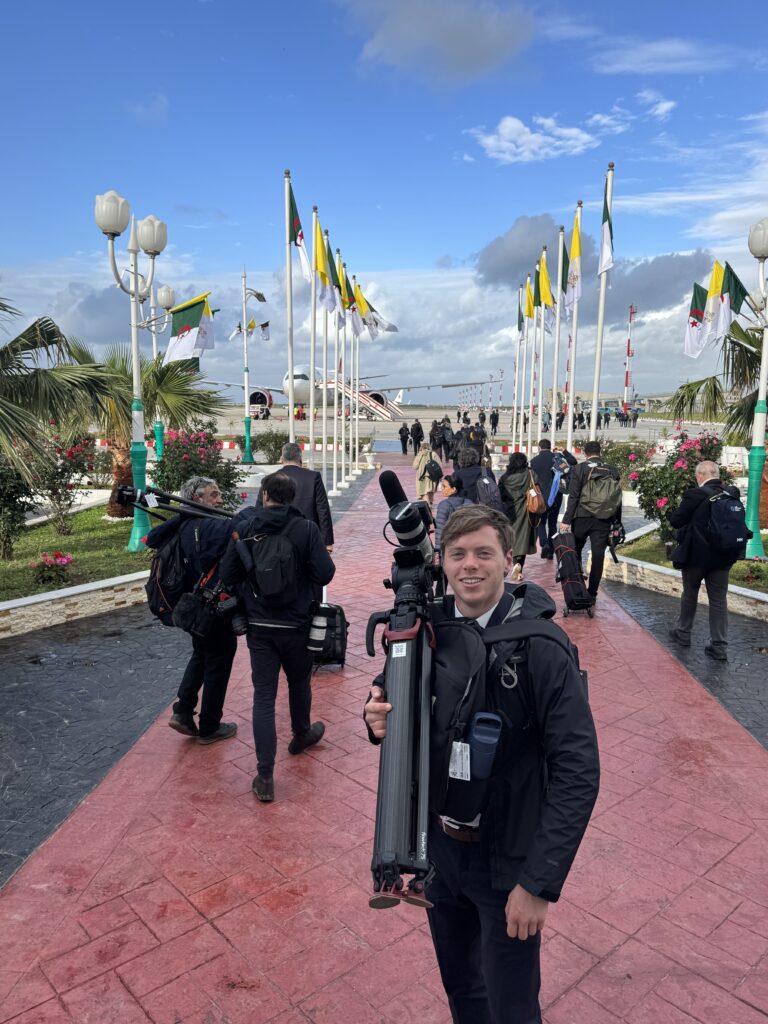
Leonard at his first leg of the African trip in Algiers, Algeria

“I was chatting to this Irish guy called Colm Flynn in a coffee shop in Brooklyn, New York as I was working as a designer there at the time. We ended up working together and he introduced me to working with RTÉ, BBC and EWTN too”.

He continued, “I then lost my job during Covid as a designer. So we ended up doing video production all the time together documenting coronavirus in New York. Then for EWTN, our relationship kept growing and they offered me a full time gig in Rome and I took that up and moved to Rome for three years”.

He said he didn’t have a particularly strong interest in Vatican affairs before taking up the role, but is a practicing Catholic. However, through his posting in Rome he was able to learn on the job. He laughed as he highlighted a full circle moment that the very first video he ever made was of a First Holy Communion in Rathcormac Church here in Sligo when he was around 12 years old.

He is now based in Sligo as he is a freelancer, but leaves the country quite often to carry out his documentary works for his various clients. He made quite a few trips to Rome last year with EWTN, as the death of Pope Francis occurred and indeed the conclave and the inauguration of Pope Leo XIV occurred too.

In April 2025, Leonard was making a documentary on the life of Pope Francis, as he and his team had gotten word that the Pope was ill and he was expected to pass very soon.They were shooting content in Buenos Aires, Argentina – the home of Pope Francis, for this to air if this were to happen.

When he touched down in Dublin after returning from this trip, he said “my phone exploded because Pope Francis had just died. It was unexpected in a way because he was seen speaking to the crowd in St. Peter’s square the day before”.

“It was huge news. Every media station from all over the world is rushing to the Vatican. I went straight there from when I touched down in Dublin after Buenos Aires. I covered the funeral and the conclave then for EWTN”.

He continued that “the conclave particularly stands out as you don’t know when it’s going to happen – you’re so on edge waiting for the smoke to come out – is it going to be white or is it going to be black?”.

Leonard speaks about his recent trip to Africa with current Pope Leo XIV. The flight from Rome was a chartered flight for 11 days with ITA Airways. The airline works very closely with the Vatican to plan trips like this, as Leonard says they bring every meal that they will eat on the plane pre-prepared. He says the logistics were thorough for the 18 flights in 11 days across the continent.

The first trip from the Vatican was to Algiers, Algeria, where Leonard had the opportunity alongside other media to speak to Pope Leo.

“I had been a few metres away from him right after his election but this was the first time that I actually got the handshake and to speak directly to him”.

Despite a short window of time that Leonard got the opportunity to speak with the Pope, he says that he made him feel completely at ease.

“He’s not in a rush, it’s not like another celebrity where you might just get a nod or something. He really seemed interested in what I was saying”.

He continued, “I told him I’m from Ireland and he acknowledged the connection there as he spent some time here in the mid 2000s when he was the head of the Augustinians. I also got to tell him about filming a documentary in Algeria right after his election. As he is an Augustinian, he has a connection to Algeria where St.Augustin comes from”.

Leonard speaking to Pope Leo

The trip for Leonard was busy, as he describes how each country is very different to the next.

“You are going through different climates, cultures and languages in each place. The response in each country to the Pope is very varied too”.

Asked about how he initially got into such a profession, he said he originally started making home videos at the age of 11 and he “never stopped”.

“Some locals decided to pay me to make a video of a Sean nós festival in Rathcormac and I just kept doing it and enjoying it more and more”.

He studied Industrial and product design in college, worked as a designer for sometime and went back to videography after Covid, as he says he is glad he made this career move.

He hopes to get the opportunity again to travel alongside the Pope, but says that for now the next trip is already planned for documentary making of the work of the Church on the ground in the Baltic countries – covering Lithuania, Estonia and Latvia at the end of this month.

VN:F [1.9.22_1171]
Rating: 0.0/5 (0 votes cast)
VN:F [1.9.22_1171]
Rating: 0 (from 0 votes)

Local Paramedics Join National Industrial Action

Paramedics striking outside Sligo University Hospital


By Christopher Conway

Around 15 paramedics gathered outside Sligo University Hospital on Tuesday morning as National Ambulance Service staff across the country began a series of industrial actions in an ongoing dispute over pay, recognition and working conditions.

Members of SIPTU and Unite have accused the Health Service Executive of failing to implement recommendations from an independent review, which called for ambulance staff salaries to be updated to reflect the major changes in responsibilities, workload and clinical complexity over the past 15 years.

The industrial action, which took place nationwide, was expected to impact non-emergency ambulance services, while the HSE warned of delays to some callouts during the dispute. Union representatives said the escalation reflects long-standing frustration among staff. 

Speaking outside Sligo University Hospital, frontline paramedics Aoife and Ciaran said they had been left with “no choice” but to take industrial action after years of engagement failed to deliver meaningful change.

“We’ve engaged on a local level and a national level to try to get this sorted over the past couple of years, but they’ve left us no choice, and we’re here striking today,” Ciaran said.

Paramedics said the dispute is rooted in the transformation of the ambulance service, which they argue has evolved significantly from its traditional transport-focused model into a highly skilled emergency medical service requiring advanced clinical decision-making and increased responsibility.

“A lot of it centres around pay and recognition of the transformation of the service over the last 15 years,” Ciaran explained.

“It’s gone from a vocational transport service right up to a very skilled service that has taken on a lot more responsibility. The jobs have changed, the responsibility has changed, but the pay hasn’t really reflected that, and that’s why we’re here today.”

Aoife said staff are now routinely working in high-pressure environments with increased expectations placed on frontline crews, but that this has not been matched by improvements in pay or conditions.

“I think we’ve taken on a lot of responsibility in recent years, and the pay does not reflect any of those responsibilities,” she said.

“We want change to happen for everybody that’s been in the service before us, but especially for those coming into the service now. We want recognition for all our responsibilities, and we want that change to happen.”

Staff also pointed to wider pressures within the ambulance service, including long shifts, increasing demand, and what they described as deteriorating working conditions over time.

“For us certainly, I’ve seen the deterioration in conditions,” Ciaran said.

“We’re out for many hours on shifts, and altogether we’re just hoping this gets recognised out of this dispute.”

Despite the disruption caused by the industrial action, paramedics stressed that patient care remains central to their concerns, insisting that their action is ultimately about safeguarding the service’s future.

“Bear in mind the patients that we see,” Ciaran added. “We want to be able to bring this service well into the future. That’s why we’re out here.”

The paramedics also outlined their own backgrounds in the service, highlighting the experience within the workforce involved in the dispute.

Ciaran said he had worked across the west and northwest before returning to Sligo in recent years, gaining experience in a variety of roles at different stations and in different regions.

“I’ve been all over the west and northwest myself over the last couple of years, but I’m back in Sligo now for the last two or three years,” he said.

Aoife said she had spent seven years in the ambulance service, beginning her career in ambulance control before progressing to frontline emergency response.

“I’ve been five years on the road,” she said. “I actually started in ambulance control, so I was two years working there first coordinating crews, and five years on the road. Seven years in total with the service.”

She added that staff were proud to stand together in Sligo in support of the wider national campaign.

“We’re very proud to be here now and be on the picket line in Sligo and supporting SIPTU in getting the agreement on the table,” she said.

The dispute has developed amid growing tensions between ambulance staff and management over pay parity and recognition of role changes within the National Ambulance Service.

Unions argue that independent recommendations have already acknowledged the increased clinical responsibility carried by paramedics and advanced paramedics, but say these have not been fully implemented.

As a result, staff say morale has been steadily eroding, with many citing increased workloads and longer shifts as key concerns. They argue that the service has evolved rapidly in recent years, but that pay structures have not kept pace with those changes.

The 24-hour strike action concluded at 8 am on Wednesday, May 13, but unions have warned that further escalation is likely. A 48-hour stoppage is planned for next week, followed by a potential 72-hour strike the following week if negotiations do not resume.

For paramedics on the picket line in Sligo, however, the message remained consistent: the dispute is not only about pay, but about recognition of a profession they say has changed fundamentally over the past decade and a half.

“We’ve engaged at local and national level trying to get this sorted over the past couple of years,” Ciaran said. “But there was no choice.”

VN:F [1.9.22_1171]
Rating: 0.0/5 (0 votes cast)
VN:F [1.9.22_1171]
Rating: 0 (from 0 votes)

Successful turnout brought hope to Darkness into Light event in Sligo town 

People walking in Sligo at Darkness into Light

By Cara McHugh

A successful turnout brought hope to Darkness into Light event in Sligo town 

Chairperson Anne Tully spoke about the DIL’s successful event last Saturday morning as she said “We got the most beautiful morning”. 

Tully made a speech at the event and thanked her fellow Committee Members and all Volunteers involved, and spoke about Pieta’s services and creating mental health awareness.  

She then joined Calry Folk Group to sing ‘The Rose and Whispering Hope’ which had a special meaning for her. She said they then had a rendition from Donal & Tom of the Lake Isle of Innisfree, after Donal Gilroy/Cathaorleach Sligo County Council cut the ribbon and launched the walk. 

“We also had John McMorrow who did some video coverage for RTÉ.  Chris had designed a beautiful arch and we had a Reflection tent for people to take a moment to remember their loved ones”. 

Tully says that “When we came down by Sligo General Hospital we saw the most beautiful design, the word HOPE in Hindi, Chinese, Ukrainian, Polish & Latvian, Spoken differently – but felt the same (Created by Wendy, Trudy, Ciaran and their team mates)”. 

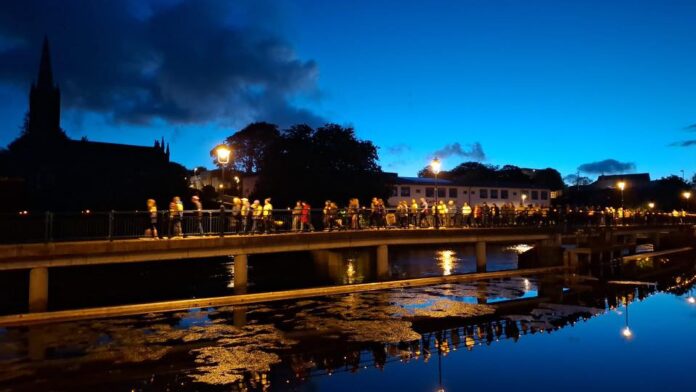
She said the wall came along the footbridge going along to the Riverside Hotel which was designed with around 200 Darkness into Light yellow tealights by Committee member Carl. 

There was music by the Rathcormac Folk Choir at the Burbon, Ambrose & Kiara at the Post Office, and a Gospel choir around the Ulster Bank.  

Tully added that “the music really enhances the whole atmosphere and we were so blessed to have all this support.  We had 1200 people come out last year and I feel we may have had about 1500 this year”. 

“A massive thank you to all who came out to walk in memory of all those who have lost a loved one”

Kelley & Michael of the committee organised the food at ATU afterwards and Tully said thank you to all the Businesses who donated food to them.   

She also mentioned the Calry Foroige Club who came and helped set up on Friday evening. She also said thanks to “Sligo BID, Sherry Fitgerald, Damien Kennedy for our Video, Sam Elliot for our photographs and Emma our newest Committee team member who did an amazing job with all our social media”. 

“I am so so proud of how it all went”, concluded Tully. 


VN:F [1.9.22_1171]
Rating: 0.0/5 (0 votes cast)
VN:F [1.9.22_1171]
Rating: 0 (from 0 votes)

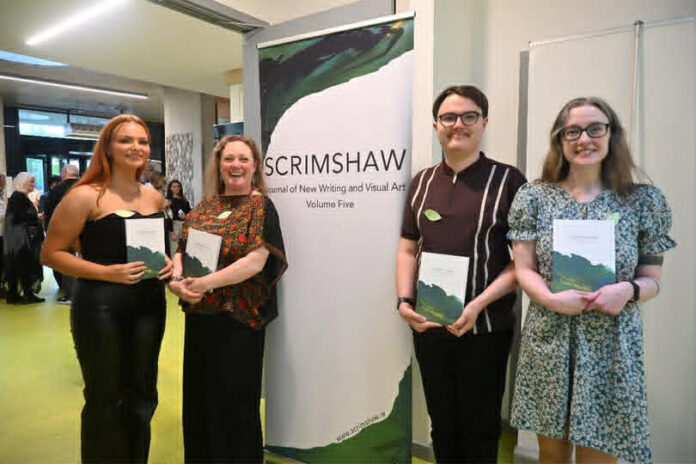
Scrimshaw successfully launches its fifth volume

Credit: Ivana Hanjs // Scrimshaw editorial team.

Scrimshaw, a journal for new writing and visual arts, launched its fifth volume in ATU Sligo on April 30, at the Black Box in the Arts Building of the College. The publication is the work of final-year Writing and Literature Students. The launch saw speeches from the Editors-in-Chief, a video from ATU President Orla Flynn, and the author of The Boy From The Sea, Garrett Carr, who expressed some words, as well as readings from people with poems included in the journal. 

Editors-in-Chief Melissa Breen and Emily James spoke to the Sligo Weekender immediately after the launch about their experience working on the journal, Scrimshaw’s growth, and how they balanced working on the journal alongside their college work. 

With emotions still high, Melissa and Emily admitted they were excited and proud now that the journal is launched. Emily stated, “ Overwhelmingly proud, not just of what we’ve done, but we’ve only been able to do that because we’ve had such amazing support from everybody. It’s just such a community project. It’s not just what we do, it’s what everybody does, and it is humbling to be part of it.”

This year will see a larger release of the publication, with copies of the journal being provided to certain libraries and bookshops in Sligo, Cork, Galway, and Dublin. Additionally, Scrimshaw will be the focus of a special journal showcase event at the Irish Writers Center in Dublin on May 20 with guest speaker Dr Keith Hopper. On the upcoming event, Emily remarked that it was a good way to get eyes on the journal from the publishing industry, confessing it was her who set-up the event “I went to the West Cork Literary Festival, and I’d been appointed the Editor-in-Chief by the time that festival came on, and I knew the Irish Writers’ Centre and what they did, so after one of their sessions I basically button-holed Damien Donnelly and said, I’m going to be an editor for Scrimshaw and we’re doing this, and he said, that’s great, because they want to start doing spotlights on Irish literary journals, because there’s so many of them and they’re so varied and each has its own flavour, audience and community that goes behind it” 

Another significant development for this volume was the appointment of a Social Media Manager, with the role assigned to Gemmaclaire Haverty, another final year Writing and Literature student. Scrimshaw’s social media has played an increased role in promoting the journal, alongside engaging interviews with authors like Jessamine O’ Connor and Alice Lyons. Discussing the raise in social media usage, Emily said it was something they were keen on, she stated “ I don’t have a profile, I’m not good at that stuff at all, but I know it’s important, and I know that to get people heard, you have to make it available in as many formats as possible .. and that takes effort and perseverance, and having the idea about what people will find interesting, and Gemma just naturally knows that. She’s got that intuition to say, right, this will make a good story, this will go well, this will get people into what we’re trying to do, and the breadth of interviews that she’s been doing and the variety of them, it’s just been amazing to watch.”

Melissa and Emily are online students of the Writing and Literature degree at ATU Sligo, with Melissa admitting she was concerned at first about how they would succeed while not physically being at the college. However, she stated that communications were great and particularly praised on campus student and editorial team member, Dean McMorrow, as being their boots on the ground man. She said, “We wouldn’t have been able to do half the stuff if he weren’t here. We really appreciated him there. Everyone was so accommodating. We didn’t have a problem at all.”

Emily revealed that, as a result of attending the launch, they were both able to attend class in person for the first time, “ It was so strange, because it’s like, oh God, everybody’s doing this normally. They’re not sitting in their own house.  A couple of times, I was trying to wave at people, and they were not there.”

Melissa admitted the editing experience of the journal was intense but also fun, noting they once had a seven-hour day, reflecting “everyone was such a trooper, because it was long and it was gruelling. But we’re glad we put that work in and that we gave each submission its time.”

Emily elaborated that they had two five-hour meetings the following two days after that, and by the end, she didn’t know which way was up, causing her to worry if she was doing things correctly “You’re like, which was that submission and which one are we talking about? Then, sending out the rejections and the acceptances. I don’t know how many times we checked to make sure we didn’t send the wrong one to the wrong person.”

They divided the labour by giving every editor their own portfolio to work with, with Emily claiming it allowed them to work closer and better with those contributors “ I’ve got a soft spot for all of the ones that I worked with, because you get to know people backwards and forwards. Not always calm, but you get there at the end, you’ve got something everybody is pleased with and proud of, and that was important.”

With four successful volumes already out, Emily thought that something would go wrong this year, saying, “Hearing it’s a milestone regularly was a little daunting, because you don’t want to be the one to not order enough wine at the party. My biggest fears were things that I couldn’t see. When we got it all printed, and we sent the specifications, the same as it has been for the last four years. I should not have been worried, but I had this panic that it was going to be twice the size… those were the things that I ended up panicking about, that we’d miss something so big that it couldn’t be ignored.”

Emily and Melissa receiving flowers

Emily talked about the previous volume of Scrimshaw and how it struggled to receive funding from the college, stating,” Last year, they barely had the money to do the thing, and because of that, this year, it was right in the budget because there was so much publicity afterwards about this flagship thing. We benefited from last year’s misfortunes … but it didn’t stop me panicking about that and phoning up and saying, Is it approved? Exactly how much budget do we have? And when can we do it?” Melissa commented that Scrimshaw had done a great job last year, which is why they were trusted with the funding, as the college believed it was worth the money. 

Emily mentioned she is looking forward to next year’s Scrimshaw,  as the publication continues to build on what came before, stating, “Every year it’s going to get better. They’ll take it in a different direction, or they’ll have an idea that we never even considered. They’re going to do something that’s representative of them. I think this is representative of us. We had a strong vision right from the beginning, and it’s there.” 

Melissa noted she was still in disbelief at having something that was a mere thought in her head become actualised. They communicated how bizarre it is to have it released and to no longer have to worry about it. Melissa said, “ I didn’t have to do anything on Tuesday, and every hour I was like, oh, I should… No, I don’t have anything to do today. It was very weird.” Emily replied that the feeling that something needs to be done when it doesn’t is going to last for a while.

Despite admitting they had very different views throughout the process, both agreed that the piece that spoke to them most was a poem titled By the River at 1am by Fanni Dominika Varga, and that’s why they decided to make it the first piece in the journal. Melissa recalled, “ When we were deciding the layout, Emily approached me and was like, what is the one thing that captures what we want to do? And I said that one and she was like… That’s my favourite.” With Emily responding, “ We’ve had very different views on different things all the way through … but the fact that we both picked that one was like, that’s definitely got to go first.”

Mellisa highlighted that she and Emily can be quite opposites, with Emily being wordy and creative and with Melissa focusing on screenwriting, she aims to get as much information in as small a space as possible, but they complemented and played off each other. Emily added, “ What would happen is I would write a thousand words, and then Melissa would cut it down to 50, and that was the 50 right words, but we had to go through that.”

Melissa and Emily noted they have held off on reading Scrimshaw since it was published. Emily expressed, “I’ve read everything in that journal so many times, line by line, word by word. I haven’t touched it since it went to print because I’m too scared to look at it, just in case there’s something obvious.

Mellisa was surprised that they were able to balance working on Scrimshaw alongside their final year college work. Emily revealed that she works as well, and that she was trying to juggle the three things, stating, “The thing is that you do stuff that you love. It doesn’t feel hard to fit in, and you’re thinking about it all the time anyway. I would say I had far too many sleepless nights thinking, I’ve got to remember to do this, or I’ve got to do that, or I’ve got to check that.” 

Melissa remarked that what kept making it easier was the variety of different things they had to do “It was easy because there were so many different jobs. We weren’t doing the same thing every day. There’s just so much to it that there is variety. So it was fun, and that helped. That was a good motivator.”

Finally, Emily wanted to encourage people to submit their work, whether to Scrimshaw or somewhere else, stating, “You will get rejected sometimes, but when it works and when you have your stuff in print, it’s such an amazing feeling. It’s been such an honour to … enable people to have their voices heard. I can’t recommend people doing that enough. Whatever it is, send it off to the best place you can think of and keep doing it because everybody has this amazing voice and perspective.”

VN:F [1.9.22_1171]
Rating: 0.0/5 (0 votes cast)
VN:F [1.9.22_1171]
Rating: 0 (from 0 votes)

ProArgi 9+ Testimonials – A medical miracle

IN 1998 the Nobel Prize for Medicine was awarded to three American scientists, for their discovery of how the endothelium converts the semi-essential amino acid L-Arginine into Nitric Oxide. Referred to by many as “The Miracle Molecule”, Nitric Oxide is a signalling molecule, that is to say, the Nitric Oxide causes specific functions to occur in the bloodstream.
For over 100 years nitro-glycerin has been used for temporary relief of chest pain or angina.
Why it worked was a mystery until until three scientists, Robert F. Furchgott, PhD, Louis J Ignarro, PhD, and Ferid Murad, MD, PhD received the 1998 Nobel Prize for Physiology and Medicine for their discoveries concerning “nitric oxide as a signaling molecule in the cardiovascular system.”
The mystery was a simple molecule-nitric oxide.

It is simple yet so effective that it is now referred to as “The Miracle Molecule.” Nitric oxide, NO, is a gas that was considered a pollutant.
It is now understood that this short-lived gas is vital for cardiovascular health. It is produced by the single cell thick inner lining of your arteries called the endothelium.
The complicated process involves the and has been shown to be crucial in circulatory health.
The discovery by Dr. Salvador Moncada that endothelium derived nitric oxide is made from the amino acid L-arginine tied it all together.
This began a massive amount of research on nitric oxide and L-arginine that is now approaching 200,000 published medical studies.
Studies have shown NO has a positive effect on blood pressure, blood flow, and improves the flexibility of the blood vessels.
When the endothelium is healthy, it produces enough NO, however aging, illness, genetics, and a lack of physical activity significantly lowers the production of NO.
Supplementing with L-Arginine greatly improves the blood vessels and cardiovascular health.
Three functions or benefits of Nitric Oxide to your vascular health are…

1. It causes the smooth muscle of the vascular wall to relax. The result is vasodilation (opening of the arteries) allowing for greater blood flow into the tissue and organs. This typically helps bring High Blood Pressure back into a normal range in a natural way.

2. Nitric Oxide keeps blood platelet cells from sticking together to naturally lower your risk for strokes and heart attacks.

3. At high enough levels the Nitric Oxide will initiate a reparative mechanism to help heal the damage done to the endothelium to help maintain it’s the ability to properly produce Nitric Oxide.
The reparative process also helps prevent plaque formations and calcification, which accounts for approx. 74% of all Cardiovascular Disease.
Stress, high blood pressure, high sugar levels, LDL or bad cholesterol, and nicotine all directly damage the endothelium.
This damage significantly decreases Nitric Oxide production, whilst increasing the risk for strokes and heart attacks, as well as other cardiovascular health concerns.
Unless you are actively nourishing the endothelium to enhance its ability to properly produce Nitric Oxide, this damage will continue to occur.
ProArgi-9+ has been infused with more vitamins and minerals, making your dose of ProArgi-9+ that much more effective in your pursuit for optimal health.
New Formula enhancements include:
– Added red wine extract
– Added folic acid
– Added Vitamin K
– Increased Vitamin B12
– Increased Vitamin B6
– Changed sweetener to Stevia

The combination of ingredients in ProArgi-9+ was meticulously formulated to help support your health.
This product is pure, potent and formulated to help you live life optimized.

ProArgi-9+ can be taken at any time during the day, simply mix one packet with 240 ml water and stir until dissolved.

VN:F [1.9.22_1171]
Rating: 0.0/5 (0 votes cast)
VN:F [1.9.22_1171]
Rating: 0 (from 0 votes)

Latest News

Weather

sligo, IE
clear sky
26 ° C
26 °
26 °
50%
4.6kmh
0%
Thu
17 °
Fri
16 °
Sat
12 °
Sun
16 °
Mon
17 °